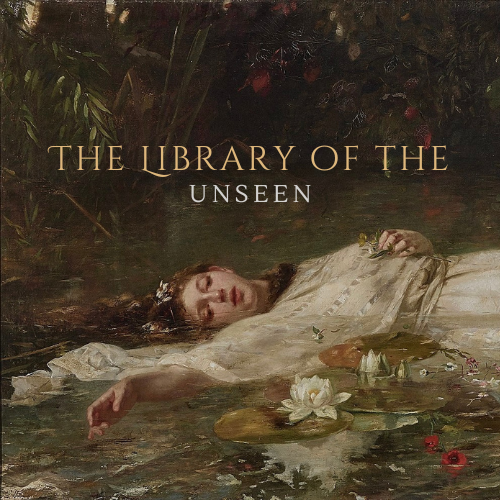

Can you hear it?
Listen.
And now?
The chime of the old grandfather clock that adorns a corner of my room resounds every hour to announce the beginning and arrival of Halloween. And yet, even before I started carving monstrous faces into pumpkins and before this grim tradition reached the rest of the world, the night dedicated to spirits had an entirely different name.
Samhain, from the Gaelic “Summer’s End“, was a very important Celtic celebration in which the veil between life and death blurred to nothing. The ancient Celtic calendar was divided into two parts, one of light and one of darkness, with the latter marked precisely by Samhain. Therefore, with the upcoming winter and the end of the harvest, it is no coincidence that this very time of the year was feared greatly by the tribes, but it is also true that they firmly believed that during that fateful day the boundaries between the realm of the living and the dead thinned to such an extent that not only spirits could wander into the earthly realms, but more importantly that mortals could end up and be lost in what we call the afterworld. In the communities, fires and bonfires were lit, and men disguised themselves with animal furs to ward off the evil.
Although the seed of the Halloween festivity derives from the ancient Celtic tribes themselves, other cultures as well celebrated death and rebirth with myths or festivals that fell in the same autumn period, which often coincided with the agrarian calendar. However, if Halloween is considered today the epitome of the macabre and the dead, we owe it, strangely enough, to the Church. As Christianity grew throughout Europe, it was this religion’s desire to expunge pagan holidays that sowed another seed of what would become today’s Halloween. Or rather, All Hallows’ Eve.
Like most of the holidays in the Gregorian calendar that we still celebrate today, the majority of these feast days derive from pagan traditions transmuted into Christian ones. In fact, it was the idea of not razing them to the ground and adopting, reimagining, and transforming them that led to the greater spread of Christianity—and it all started with a single day and a single festival.
Lemuria, a pagan fête in which the dead were finally appeased, culminated on today’s May 13th and spoke of the ghosts of the departed returning from the beyond and haunting those left behind. In order to appease them, the ancient Romans used to pour milk over the graves of their loved ones or offer them small cakes. In 609 A.D., however, Pope Boniface IV transformed May 13th into the day of All Saints, dedicated to the martyrs, to honour the holiest of Christians. With the success of the commemoration eradicating in Europe, the Church decided to move the feast of All Saints’ Day to November 1st, most likely to empty the pagan Samhain of life. With time and the transmutation of the word, the holiday morphed into All Hallows Evening, which then led to Eve and finally Halloween.
The Church, however, decided to go a step further and created an additional celebration, this time dedicated to all Christian dead, naming it All Souls’ Day, falling on November 2nd. And perhaps it was from this trio of macabre festivities that the idea of “trick-or-treating” was born, although not entirely. Along with the Catholic ideology that some souls might end up in purgatory (a netherworld where they could be purged and then ascend to heaven), the thought that enough prayers might help the poor departed to reach the celestial realm more quickly prevailed as well. Children, beggars, and anyone willing to join the new tradition began visiting house to house and asking for soul cakes, small sweets made of spices and raisins, in exchange for prayers for the dead. The custom of dressing up and reciting a play or poem for food or sometimes even money also became widespread in Britain. But trick-or-treating, and in particular the mischievous spirit this night brings, was one of the last elements to take hold for modern Halloween. Meanwhile, the other symbols for this festivity invaded Europe as early as the dawn of the 17th century, like turnips carved into lanterns—tracing back to Jack, the only soul cunning enough to outwit the Devil—or the belief that lighting candles on Hallows’ Eve night would have guided loved ones’ spirits safely back home. From rural areas, these celebrations gradually reached the big cities as well, mainly thanks to a pro-Catholic man named Guy Fawkes, who attempted to blow up the House of Lords in London with gunpowder on November 5th, 1605. His audacity cost him his life but also his death, as from his vain attempt a tradition of taunting was born during which, on November 5th of each year, even children mocked the memory of Guy Fawkes—causing chaos in the streets, parading, and lighting bonfires.
However, if we have anyone to thank for how this sinister holiday is today, we must necessarily turn our eyes to America and how it brought life to our current Halloween. Despite all the Puritans’ attempts to keep the pagan and Catholic celebrations away, it was inevitable that with the arrival of the Scots and Irish on the western continent came along the dreaded spirit night. Indeed, it was the European immigrants and young Americans who started the tradition of pranks, who turned pumpkins into jack-o’-lanterns, and tinged Halloween with orange and black. With all these events, feasts, celebrations, and mournful symbols, the 20th century saw the artists of the time put together a puzzle with pieces that complemented each other perfectly and more and more people becoming interested in this hallowed night.
Initially only with the intention of curbing violent pranks that destroyed entire properties each year, someone saw success behind the goldenrod jack-o’-lantern, and between newspaper magazines designating masks and costumes, articles about exchanging treats so as not to receive tricks, and the media beginning to depopulate the world, we have finally arrived at the present day.
The immense details of Halloween are all incredibly fascinating. Witches, ghosts, jack-o’-lanterns, or malevolent entities, the night of the spirits can be said to be very different from its origins, transformed into a time of pleasure and folly that overwhelms everyone from young to old—even though there are still those who believe in its roots and how with each chime of the clock the boundary between life and death shrinks more and more.
But whether you believe it or not, dear reader, tread softly, for tonight the dead roam.
Up, All Hallows’ Eve Illustration by my amazing twin Soul
Sources:


 The Library of the Unseen
Beautiful description of my sign! Thank you ☺️ 😘😘